
Supreme Court Approved a Wartime Protest — a Man Went Into Cardiac Arrest
The court overrode Home Front Command restrictions, police lost control, and a citizen nearly paid with his life. Who takes responsibility?
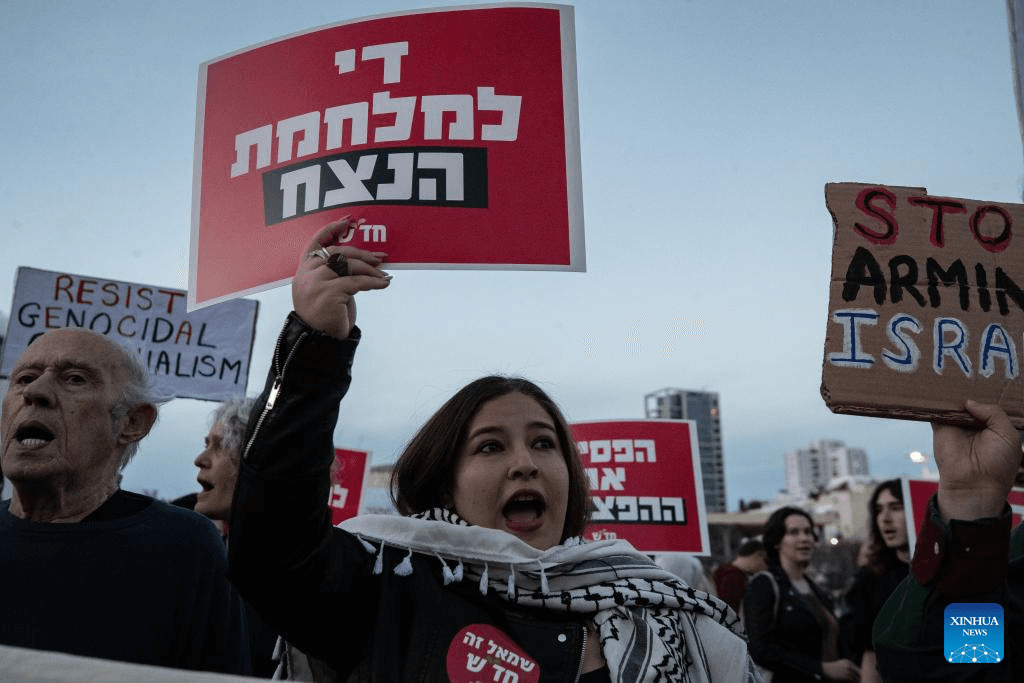
Saturday night, Habima Square, Tel Aviv. Around a thousand protesters gathered in an anti-war demonstration — a protest the Supreme Court itself authorized, overriding the restrictions set by Home Front Command. The result: a mass event that spiraled out of control, 16 arrests, and a 50-year-old man who went into cardiac arrest in a public shelter and was evacuated in serious condition to Ichilov Hospital.
This was not an unpredictable event. It was the foreseeable outcome of a judicial decision that ignored security realities. Home Front Command limited gatherings to 150 people in Tel Aviv and 50 elsewhere. The Supreme Court decided that wasn't enough — and authorized up to 600 participants at Habima Square. In practice, around a thousand showed up.
Does the Supreme Court Know Better Than Home Front Command?
Chief Justice Yitzhak Amit asked during the hearing: why prohibit protests during wartime? The question sounds academic — until someone goes into cardiac arrest in a crowded shelter. Home Front Command didn't restrict protests arbitrarily — it did so because there is a real security threat. But the Supreme Court, as usual, decided it knows better than the professional authorities.
The decision to authorize a mass event while the front is active, while air-raid sirens are sounding, and while shelters are part of daily reality — this is not protecting the right to protest. It is irresponsibility. Freedom of assembly is an important value, but it does not stand above human life.
Police Were Left Alone on the Ground
When it became clear that the number of protesters far exceeded what the court authorized, police were forced to act. Sixteen protesters were arrested, including activist Alon-Lee Green. Police declared a threat to public safety and warned they would use force. But who put them in that situation? The Supreme Court's decision created a reality where maintaining order was impossible.
National Security Minister Itamar Ben Gvir attacked the judges — and rightly asked: who will take responsibility when someone gets hurt? Ultra-Orthodox parties condemned the desecration of Shabbat forced by the judicial panel. These are not just political questions — they are questions of national priorities.
The Bigger Picture
The Habima Square incident is another example of a familiar pattern: the Supreme Court intervenes in professional decisions, undermines the authority of security agencies, and then when the consequences blow up — no one takes responsibility. Home Front Command said 150. The court said 600. A thousand showed up. A man went into cardiac arrest.
Freedom of protest is a fundamental right. No one disputes that. But a fundamental right does not mean everything is permitted in every situation. When the country is at war, when sirens are sounding, when citizens must enter shelters — the court's responsibility is to protect human life, not to play politics at the expense of security.
Join Torenu's newsletter
One sharp email a week. Clear analysis. No noise.
Related posts
The Attorney General Who Filed the Indictment Admits: He Didn't Approve Every Step
On the stand in Netanyahu's trial, former Attorney General Avichai Mandelblit said he ordered a wiretap on Nathan Eshel stopped and called the ploy used on state's witness Nir Hefetz improper. The gap between his formal authority and what investigators did is now part of the record.
Channel 12 Tries Braverman on Air Before the Attorney General Has Decided
Channel 12 aired new details from the Lahav 433 probe into Tzachi Braverman, alleging he gathered about 30 classified protocols after October 7. The file awaits the Attorney General, but the verdict is already being drafted on air.
Labor Court Orders 210,000 Shekel Payout to Lecturer Who Praised Hamas After October 7th
Israel's labor court ordered Kay College to pay 210,000 shekels to Dr. Saada-Gargas, fired after sharing lynching images and supporting Hamas after the October 7th massacre. The ruling reveals how Israeli institutions apply radically different free speech standards.