
Supreme Court Convenes 9-Judge Panel to Remove Ben-Gvir: When Judges Override Cabinet Composition
Unprecedented hearing with live broadcast and public exclusion signals court's intention to establish precedent for removing ministers without criminal conviction
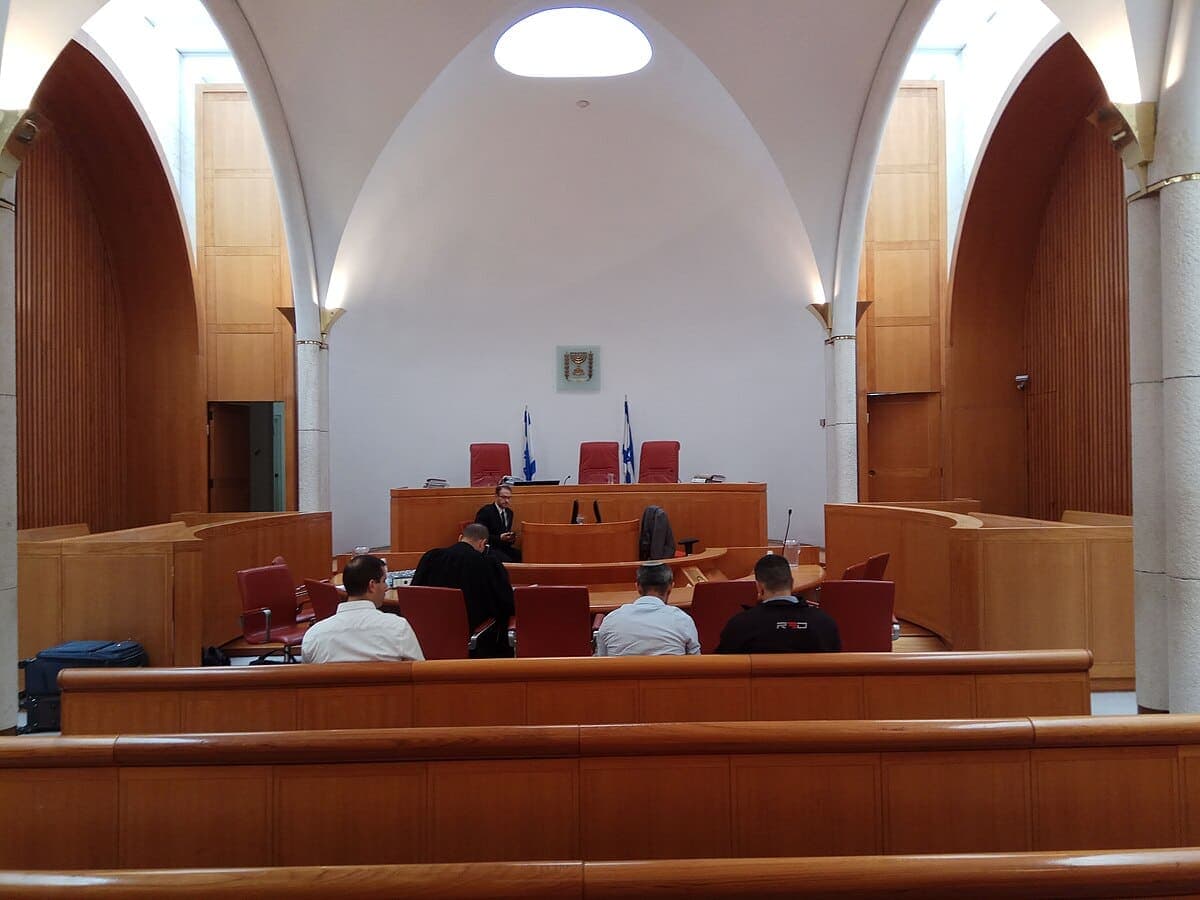
Wikimedia Commons
The Supreme Court today convened an expanded 9-judge panel to hear petitions demanding the removal of National Security Minister Itamar Ben-Gvir from office. The unprecedented hearing was broadcast live for the first time while banning public attendance except for petitioners' representatives and authorized personnel. Deputy Minister Almog Cohen was ejected from the courtroom after shouting at Chief Justice Isaac Amit, calling him 'the chief corrupt one.'
This is not routine judicial review. This is the court positioning itself as the ultimate authority over democratic governance, using procedural innovations to legitimize unprecedented intervention in cabinet composition decisions made by elected officials.
Chief Justice Amit defended the court's authority by citing '16 previous cases where the court ruled on ministerial appointments or dismissals.' But the government's attorney pointed to the Knesset's recent amendment canceling the reasonableness standard, arguing it should apply to ministerial appointments. Justice Grosskopf responded that the legislature 'specifically avoided addressing ministerial appointments and dismissals' — effectively claiming the court retained veto power over cabinet decisions even after legislative pushback.
A New Standard: "Accumulation" Instead of Indictment
The courtroom exchanges revealed the core mechanism at work. When government attorney Michael Rabello argued that accepting these petitions would mean 'every day you'll receive petitions from right and left against ministers' functioning,' Justice Solberg countered: 'Here there's a large accumulation of things. True, there's no indictment, but is that the only test? If there's such an accumulation that causes such great damage to the police image...'
Notice the standard being established: not criminal conviction, but 'accumulated damage to image.' Not legal violation, but judicial assessment of 'functioning.' The court is transforming from judicial review to executive override, claiming authority to remove ministers based on complaints rather than crimes.
The procedural theater reinforces this power grab. The 9-judge panel signals maximum institutional weight. The live broadcast creates public spectacle while excluding actual public attendance. The ejection of elected officials who object demonstrates who holds real authority in this room.
When Rabello argued that the Prime Minister 'is subject to public judgment daily and therefore presumed not to do anything unreasonable, he will stand the test of the voter,' Justice Barak-Erez dismissed this democratic accountability as insufficient. The court's message is clear: electoral mandates and cabinet autonomy are subordinate to judicial supervision.
The Ben-Gvir hearing is not about one minister's conduct. It is about whether elected governments can compose their cabinets or whether nine unelected judges hold final veto power over democratic governance. Today's proceedings suggest the court has already decided which system it prefers.
Join Torenu's newsletter
One sharp email a week. Clear analysis. No noise.
Related posts

The Attorney General Who Filed the Indictment Admits: He Didn't Approve Every Step
On the stand in Netanyahu's trial, former Attorney General Avichai Mandelblit said he ordered a wiretap on Nathan Eshel stopped and called the ploy used on state's witness Nir Hefetz improper. The gap between his formal authority and what investigators did is now part of the record.

Channel 12 Tries Braverman on Air Before the Attorney General Has Decided
Channel 12 aired new details from the Lahav 433 probe into Tzachi Braverman, alleging he gathered about 30 classified protocols after October 7. The file awaits the Attorney General, but the verdict is already being drafted on air.
Labor Court Orders 210,000 Shekel Payout to Lecturer Who Praised Hamas After October 7th
Israel's labor court ordered Kay College to pay 210,000 shekels to Dr. Saada-Gargas, fired after sharing lynching images and supporting Hamas after the October 7th massacre. The ruling reveals how Israeli institutions apply radically different free speech standards.