
Who controls information in wartime
When the public sees less and less, the institutions deciding what may be seen become part of the story themselves.
In wartime, no state operates with full transparency. Some information must remain classified, some security considerations are entirely legitimate, and there are moments when immediate exposure can help the enemy. That is the starting point. But it is not the end of the discussion. Because once the public sees less and less, and later discovers that more and more restrictions were imposed on what could be broadcast, photographed, or shown, the issue is no longer only military. It is also civic, media-related, and constitutional.
The problem is not the mere existence of censorship. The problem begins when censorship and broadcast restrictions expand to the point that the public can no longer understand what is actually happening around it. The moment citizens become almost entirely dependent on a filtered version of events, mediated by state institutions and media outlets willing to operate within that filter, a dangerous gap opens between reality and public consciousness.
Not only what is hidden from the enemy, but what is hidden from the public
Supporters of tighter restrictions will say this is necessary: interception locations cannot be exposed, impact sites cannot be shown, and the enemy must not be allowed to measure accuracy, success, or failure. That is a serious argument, and it should not be dismissed. But alongside it stands another question: in the effort to deny the enemy information, are we also preventing the public from understanding the cost, the scale of the damage, and the real picture on the ground?
- The less the public sees, the greater the power of those who mediate reality for it
- The broader the control over coverage becomes, the harder it is to know whether the picture being shown is complete or partial
- The more live broadcasting is restricted, the more the public depends on official framing and institutional interpretation
In other words, wartime is not only a battle over skies, borders, or targets. It is also a battle over information. And whoever controls information controls not only security-sensitive material, but also public perception.
Control over information is also control over narrative
When the public cannot see events in real time, it is forced to rely almost entirely on the interpretation handed to it. That is where the media question enters: who decides which footage is aired, which footage is cut, and which footage never reaches the screen at all. In such a climate, even media outlets that do not formally identify with the government can end up functioning as part of a closed and highly managed mediation system.
In wartime, whoever controls what the public sees controls part of what the public thinks.
The point here is not media anarchy, nor a demand to broadcast everything from everywhere. The point is different: a free society must know how to defend itself without entirely losing its ability to see itself. Otherwise, the line between legitimate information security and perception management begins to blur.
The question that must be asked
Not whether security considerations exist. Of course they do. The real question is where the boundary lies. Where does legitimate protection of human life end, and where does a reality begin in which the public is expected to settle for whatever official systems are willing to show it. In a democracy, even during war, that question must not disappear.
Because the moment the public stops seeing, someone else begins deciding not only what is safe to know, but also what it is supposed to think.
Join Torenu's newsletter
One sharp email a week. Clear analysis. No noise.
Related posts
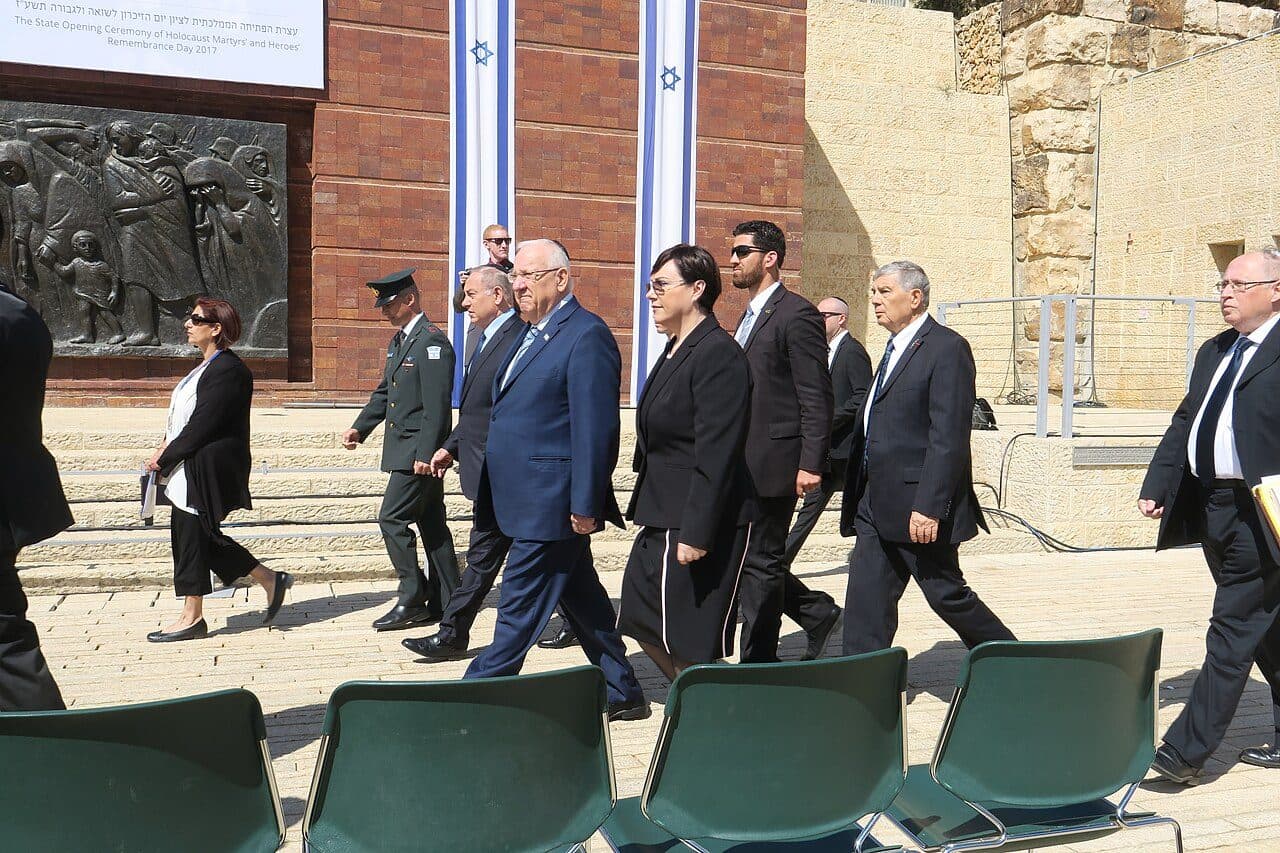
Haaretz Turns a Denial Into a Confession: Netanyahu and the Egyptian Intelligence Chief's 59 Minutes
Netanyahu confirmed on Channel 14 that Egypt's intelligence chief landed in Israel before October 7, and denied meeting him. Haaretz headlined it 'Netanyahu admitted'. The gap between the statement and the headline is the story.

A Knife in the Back in Venice: 25 Minutes of Applause at the Expense of IDF Soldiers
The documentary NAZA accuses IDF soldiers of knowingly killing civilians in Gaza, on the strength of anonymous testimony nobody has verified. The festival applauded. We call it a betrayal: of the fighters, of the country, of trust.
Ynet Gives Retired Justice Meltzer a Stage to Defend the 0-11 Ruling, Two Weeks Before the Vote
Hanan Meltzer told ynet's 'People of the State' conference he does not regret the 2020 ruling that let Netanyahu form a government. The venue, the panel and the word 'coup' were all chosen by the same media house.