
Hadar Muchtar: The Generation That Doesn't Ask Permission
Young, sharp, and impossible to silence — how Hadar Muchtar became the symbol of a new Israeli right

## The activist who rewrote the rules
There is a particular kind of discomfort that the Israeli establishment reserves for young right-wing women who refuse to be quiet. It is not the discomfort of disagreement — that can be managed, debated, contained. It is the discomfort of irrelevance. The feeling that someone has changed the game without asking permission, and that the old playbook no longer works.
Hadar Muchtar produces that discomfort in abundance. Born in 2000, she belongs to a generation that grew up with smartphones in their hands, social media as their public square, and zero patience for the gatekeepers who once decided which voices mattered and which did not. By her early twenties, she had already built a movement, amassed hundreds of thousands of followers, confronted hostile crowds on the street, and become one of the most recognized faces of the Israeli right — all without a party affiliation, a Knesset seat, or the blessing of any established institution.
That last point matters more than anything. Muchtar did not rise through the system. She rose around it. And the system has never quite forgiven her for it.
## "Israel Is Forever": from a slogan to a movement
In 2020, at the age of twenty, Muchtar founded "Israel Is Forever" (ישראל לנצח) — a grassroots movement dedicated to right-wing activism in the public space. The timing was not accidental. Israel was in the midst of a prolonged political crisis, with repeated elections, a fragmented right, and an increasingly aggressive protest movement from the left that was dominating public spaces, media coverage, and cultural institutions.
The left had mastered the art of the street. Their flags were everywhere. Their demonstrations were photographed from flattering angles. Their slogans were amplified by a sympathetic media. And the right — despite winning election after election — seemed unable or unwilling to compete in the same arena. The political right governed. The cultural left owned the conversation.
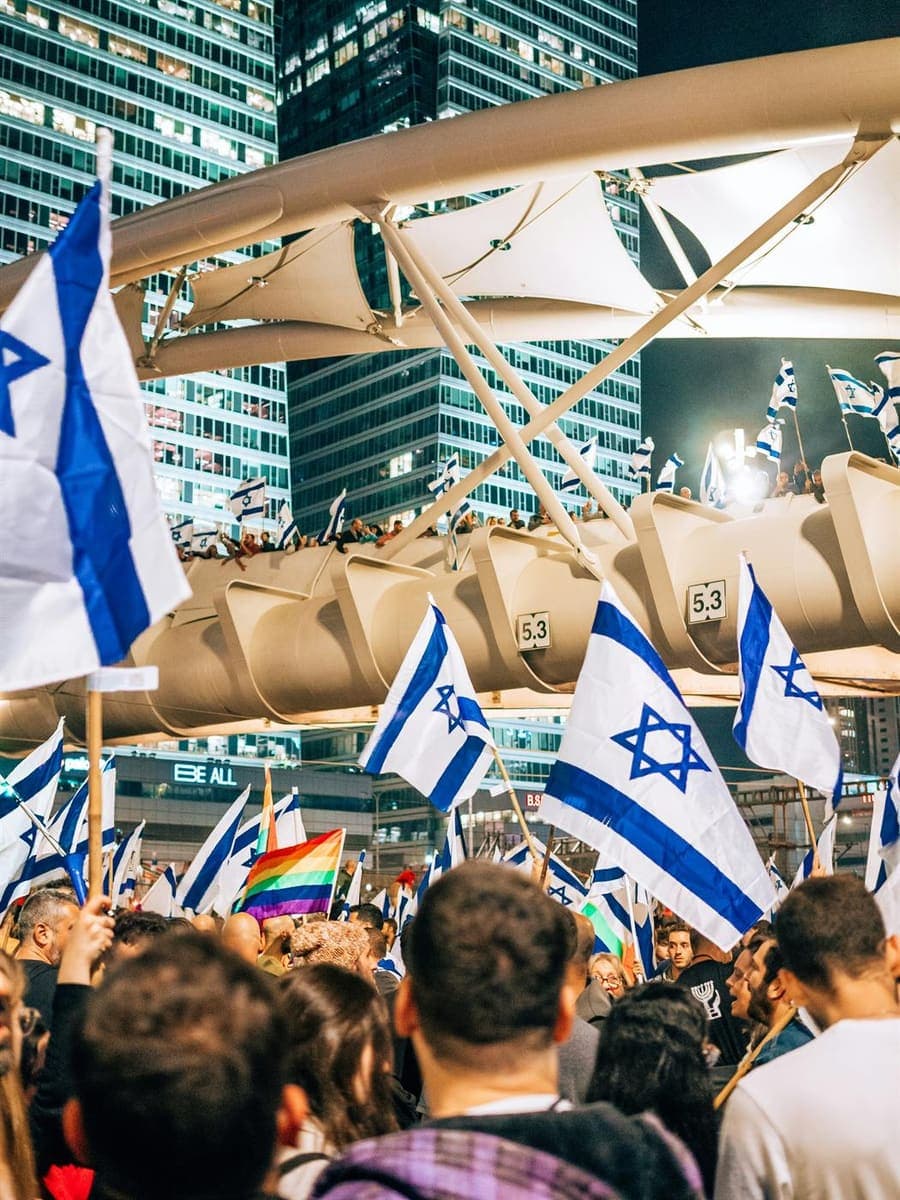
Muchtar saw this gap and refused to accept it. "Israel Is Forever" began with simple, visible acts of public presence: hanging Israeli flags from highway overpasses, organizing counter-demonstrations at left-wing protests, setting up information tables in city centers, and flooding social media with content that was sharp, fast, and unapologetically right-wing. The production values were high. The messaging was clear. And the tone was something the Israeli right had rarely achieved before: young, confident, and culturally fluent.
Within months, the movement had tens of thousands of active supporters. Within a year, it had become one of the most recognized brands in Israeli right-wing activism. Muchtar herself became the face of the operation — not because she sought celebrity, but because she was willing to do what most political figures were not: stand in the middle of a hostile crowd and make her case without flinching.
## The left's double standard
Nothing reveals the hypocrisy of the Israeli progressive establishment more clearly than its treatment of young right-wing women. When a young left-wing activist organizes protests, she is celebrated as a voice of conscience, a symbol of democratic vitality, a brave citizen standing up against power. Magazine covers. Documentary features. Fawning interviews. The full apparatus of cultural validation.
When Hadar Muchtar does the same thing from the right, the response is contempt. She is called an extremist. She is called a provocateur. She is psychoanalyzed in op-eds that question her motives, her maturity, and her sincerity. Her appearance is commented on. Her age is used against her. The implicit message is always the same: activism is admirable when it serves our cause, and dangerous when it serves yours.
This double standard is not subtle. It is structural. The Israeli media, cultural institutions, and academic world have built an entire ecosystem around the assumption that right-wing views among young people are either a phase, a product of manipulation, or a symptom of ignorance. The possibility that a young, intelligent, articulate woman might arrive at right-wing conclusions through genuine conviction is simply not entertained. It does not compute.
Muchtar has spoken about this openly. In interviews and on social media, she has repeatedly pointed out the asymmetry: left-wing youth activism is coded as idealism, while right-wing youth activism is coded as radicalism. The same behavior — organizing, protesting, using social media for political messaging — is celebrated or condemned based entirely on its ideological direction. The rules are not neutral. They never were.
## Street-level courage
What distinguishes Muchtar from many political commentators and social media personalities is that she operates in physical space, not just digital space. She goes to the demonstrations. She stands at the intersections. She shows up where the confrontation is happening, not where it is being discussed from a safe distance.
This is not metaphorical bravery. Israeli political street activism, particularly from the right, involves real physical risk. Muchtar and her supporters have faced verbal abuse, physical intimidation, property destruction, and organized attempts to disrupt their events. At left-wing protest sites, right-wing counter-demonstrators are often surrounded, shoved, and shouted down — sometimes with police standing nearby and doing nothing.
Muchtar has been through all of it. She has been cursed at, spat on, and threatened. Her personal information has been doxxed. Her family has been harassed. And through it all, she has continued to show up — flag in hand, camera running, message unchanged.
This kind of persistence is rare in any political movement. In a young woman operating largely outside institutional support structures, it is remarkable. It is also precisely what makes her so threatening to the establishment. She cannot be bought off with a position. She cannot be co-opted with an invitation to the right panel discussion. She cannot be intimidated into silence because she has already faced everything they can throw at her and kept going.
## The cultural battle the old right missed
For decades, the Israeli right made a critical strategic error: it focused almost exclusively on political power while ceding cultural territory to the left. The right won elections. The left won everything else — universities, media, arts, entertainment, NGOs, international advocacy, and the language of public discourse itself.
This was not inevitable. It was a choice — or more accurately, a failure of imagination. The old right believed that political power was sufficient. That if you controlled the Knesset and the cabinet, you controlled the country. But politics downstream of culture, as the left understood intuitively and the right learned painfully, means that electoral victories can be systematically undermined by a cultural establishment that treats them as illegitimate.
Muchtar represents the generation that refuses to make this mistake again. "Israel Is Forever" is not a political party. It does not run candidates. It does not negotiate coalition agreements. It operates in the space the old right abandoned: the street, the campus, the social media feed, the cultural conversation. It contests the left not at the ballot box — where the right already wins — but in the arenas where the left has had a monopoly for far too long.
This is what makes the movement genuinely significant. It is not just another right-wing organization. It is an attempt to reclaim cultural territory that the right lost decades ago. And the fact that it is led by someone born in the year 2000 — someone who has no memory of the old right's failures and no loyalty to its habits — is precisely why it might succeed where previous efforts failed.
## Gen Z and the new right-wing identity
Muchtar's generation is often misunderstood by older political analysts. They see young people on social media and assume they are shallow, performative, or easily manipulated. They see right-wing Gen Z content and dismiss it as trolling or provocation. They cannot fathom that a generation raised on TikTok and Instagram might hold deep, considered political convictions.
But the data tells a different story. Young Israelis are, on many key issues, more right-wing than their parents. They are more hawkish on security. They are more skeptical of the peace process. They are more willing to assert Jewish national identity without apology. And they are more comfortable expressing these views publicly, because they grew up in a media environment where gatekeepers have less power and individual voices can reach millions.
Muchtar is not an outlier in her generation. She is its most visible representative. Behind her are thousands of young Israelis who share her views but lacked a platform, a movement, or a leader willing to go first. "Israel Is Forever" gave them all three. It told them that their political identity was not something to hide or grow out of. It was something to own, to express, and to fight for.
This is a fundamental shift in Israeli political culture. For decades, young right-wing Israelis were told — by teachers, by media, by cultural figures — that their views were embarrassing. That educated, sophisticated people held different opinions. That right-wing politics was for the unsophisticated, the uneducated, the peripheral. Muchtar's movement demolished that framing. It said: we are young, we are urban, we are educated, we are media-savvy, and we are right-wing. Deal with it.
## The future of right-wing activism
Hadar Muchtar is 26 years old. She has already accomplished more in terms of movement-building than most political figures achieve in a lifetime. And she is just getting started.
The model she created — decentralized, social-media-native, street-active, culturally engaged — is being replicated and adapted by other young right-wing movements in Israel and, increasingly, by similar movements around the world that look to Israel's political landscape for inspiration. The old model of right-wing activism, dependent on party structures and establishment patronage, is being supplemented — and in some cases replaced — by something faster, more agile, and more authentic.
This does not mean the path ahead is easy. Muchtar faces constant pressure from multiple directions: a hostile media that covers her movement with suspicion, a political establishment that wants to absorb her energy without empowering her independence, and an opposition that would like nothing more than to see her marginalized or discredited. The legal system, too, has been wielded against right-wing activists in ways that left-wing activists rarely experience.
But if the last six years have demonstrated anything, it is that Muchtar does not fold under pressure. She adapts, escalates, and finds new ways to make her voice heard. She does not ask the establishment for permission to speak. She does not wait for a mainstream journalist to validate her message. She does not moderate her views to gain acceptance in spaces that were never going to accept her anyway.
## The generation that doesn't ask permission
The title of this piece is not a metaphor. It is a description. Hadar Muchtar and the movement she built represent a generation of Israeli right-wingers who have stopped waiting for the cultural establishment to make room for them. They are not negotiating for a seat at the table. They are building their own table.
This is what makes them so disruptive and so necessary. The Israeli public sphere has been dominated for decades by a narrow cultural elite that treats its own views as default and everyone else's as deviation. The protest movement, the media, the academy, the arts — all have operated within an ideological consensus that excludes roughly half the country. Muchtar's generation is the first to say, clearly and without hesitation: we do not accept this arrangement, and we are not going to politely wait for you to change it.
She was barely twenty when she started. She had no institutional backing, no political connections, no media allies. She had a flag, a phone, and a conviction that the right deserved to be heard in the public space as loudly and as proudly as the left. Six years later, she has a movement, a following, and a track record that speaks for itself.
The establishment can ignore her. The media can belittle her. The opposition can attack her. But they cannot undo what she has already built. And they cannot stop what she represents: a young, diverse, unapologetic Israeli right that has decided — once and for all — to stop asking permission.
Join Torenu's newsletter
One sharp email a week. Clear analysis. No noise.
Related posts
Tel Aviv University Removes Student From Dorms Over a 'Return of Refugees' Sticker
Tel Aviv University removed a student from its dormitories over a sticker backing the return of Palestinian refugees, Haaretz reports. The case tests whether campus rules are applied evenly, and what the slogan actually demands.
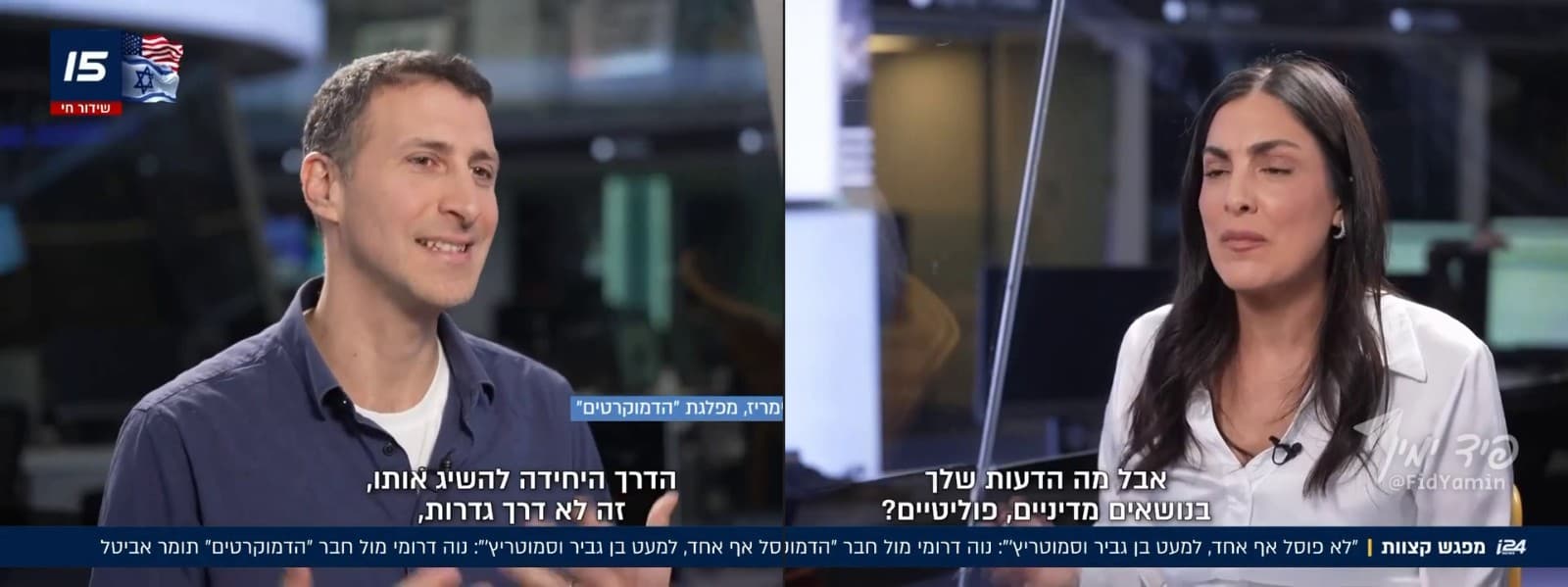
Protest Leader Admits: 'We Failed to Topple the Government' — So What Were They Actually Fighting For?
In a candid interview on i24NEWS, protest activist Tomer Avital admitted the opposition failed to bring down the government after October 7. The admission reveals what the right has said all along: the protest was never about democracy — it was about power.
Restoring balance to the public conversation without losing sharpness
Public debate in Israel has become fast, compressed, and often one-sided. Fixing that does not require more noise. It requires a clear method built on framing, responsibility, and governance.