
Tel Aviv University Removes Student From Dorms Over a 'Return of Refugees' Sticker
Haaretz presents an enforcement action as a free-speech grievance. The real questions are which rule was applied, and to whom.

Haaretz reported on 13 October that Tel Aviv University removed a female student from its dormitories. The trigger, according to the headline of the report by legal correspondent Yair Foldesh, was a sticker supporting the return of Palestinian refugees. The article sits behind Haaretz's premium paywall, and only the headline and byline are publicly readable.
That limits what can responsibly be said. The university's stated reason, the date of the removal, the exact wording of the sticker and the procedure followed have not been verified from public material. What the headline does establish is narrower: a university enforced a rule against a student living in university housing, and Haaretz, in its legal-affairs section, presented the enforcement itself as the story.
## Two questions the headline merges
The first question is about the rule. Which provision did Tel Aviv University apply, and is it applied evenly? The test is simple and can be run in public: would a dormitory resident be removed over a sticker or banner carrying a right-wing message? If the university has a published conduct code for political displays in housing, it should be able to show how it has been enforced against messages from the left and from the right. That is analysis, not an established fact, and it depends on information the university has not yet supplied in anything we could verify.
The second question is about the slogan. 'Return of the refugees' is not a neutral human-rights phrase. As a political demand, it is a position on the character of the state, one that conflicts with Israel as the Jewish state. A reader of the Haaretz headline is invited to see a student punished for a sticker. A reader who asks what the sticker advocated sees a different case: an institution weighing a political demand with real consequences.
## What to watch
- Whether Tel Aviv University publishes the rule and the grounds for the removal. - Whether the university can point to comparable enforcement against right-wing messaging in its housing. - Whether the full Haaretz text confirms the sticker's wording and the sequence of events. - Whether the coverage addresses the content of the demand, or only the sanction.
Israeli academia is an influence center, and the norms it sets on speech shape the wider public conversation. A rule that is enforced evenly is a defensible rule. A rule whose enforcement draws coverage only when it touches one side of the spectrum deserves scrutiny of its own. Until the university's reasoning is public, the case should be judged on what is known: a university acted, a newspaper chose its frame, and the standard has yet to be shown.
Join Torenu's newsletter
One sharp email a week. Clear analysis. No noise.
Related posts
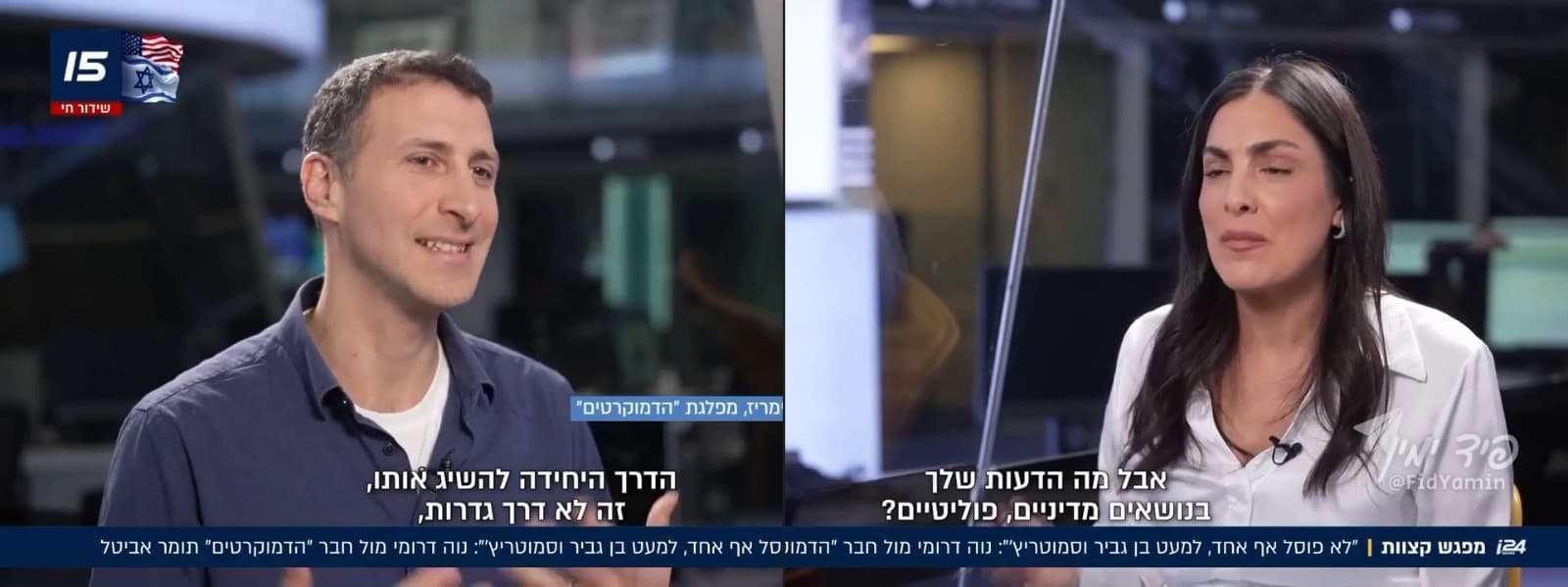
Protest Leader Admits: 'We Failed to Topple the Government' — So What Were They Actually Fighting For?
In a candid interview on i24NEWS, protest activist Tomer Avital admitted the opposition failed to bring down the government after October 7. The admission reveals what the right has said all along: the protest was never about democracy — it was about power.

Hadar Muchtar: The Generation That Doesn't Ask Permission
She was barely out of her teens when she founded one of Israel's most visible right-wing street movements. Today, Hadar Muchtar represents everything the old establishment fears: a young, media-savvy, unapologetic right that refuses to play by the left's rules.
Restoring balance to the public conversation without losing sharpness
Public debate in Israel has become fast, compressed, and often one-sided. Fixing that does not require more noise. It requires a clear method built on framing, responsibility, and governance.