
Haaretz Turns a Denial Into a Confession: Netanyahu and the Egyptian Intelligence Chief's 59 Minutes
A landing, no proven meeting, an on-record denial, and a headline that says 'admitted'. Two weeks before the vote, the packaging is doing the work the facts cannot.
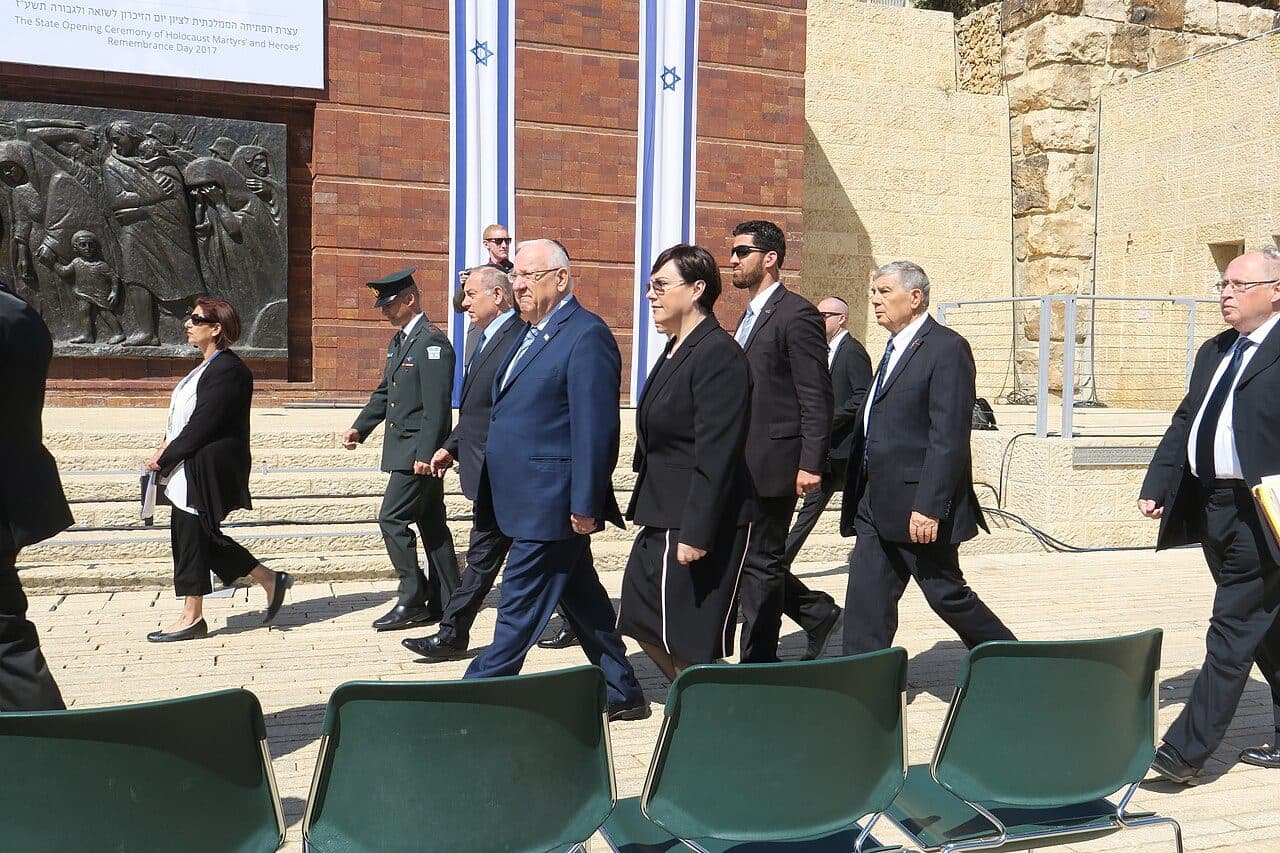
In an interview with Channel 14 on Tuesday, Prime Minister Benjamin Netanyahu confirmed that Egyptian intelligence chief Abbas Kamel landed in Israel before October 7. He also said he did not meet him and does not know who did. "He did not meet me because I was at a memorial ceremony for fallen IDF soldiers, so it was a lie from the start," Netanyahu said. At 00:12 on 14 October, Haaretz put it under the headline: "Netanyahu admitted: the Egyptian intelligence chief landed in Israel before October 7."
Read the statement itself and the word "admitted" has nothing to attach to. Netanyahu acknowledged a landing, which the public record already supports, and denied a meeting. To admit something is to concede a thing you had been hiding. Here, the prime minister said on the record that he wants to know who the visitor met. "He spent 59 minutes on the ground," Netanyahu said. "I want to know who he met with." That is a question aimed at the system around him, and Haaretz's headline turned it into a confession. This is our reading of the packaging, not a claim about what happened on the tarmac.
## A thin factual core, a heavy headline
What is actually established is modest: a stopover of roughly an hour, no evidence of any meeting, and a prime minister who says he was at a memorial ceremony. Ynet's piece the same day recalls 26 September 2023, when an Egyptian plane landed in Israel and took off about 67 minutes later. It then asks whether the prime minister checked the Ben Gurion Airport cameras. That is a question, not a finding. But a question aimed in one direction only is a framing choice. Nobody leads with who in the security establishment received the visitor, or why the prime minister was not told, if he was not.
The reporting underneath is itself careful. Citing Israeli, Egyptian, Arab, American and European sources, The Atlantic wrote that it is not known whom Kamel met while in Israel, and that he gave no date or concrete information about an attack. Haaretz's own report notes that the IDF passed Netanyahu four general warning documents. Those are the actual ingredients of a serious inquiry: who was warned, by whom, and through which channel. A headline that sums all of it up in the prime minister's "admission" skips that inquiry and goes straight to a verdict.
## Timing is part of the content
The piece landed two weeks before the election. A statement that denies a meeting is distributed as an affair, in the opening hours of the news cycle, by the outlet that has spent years treating a right-wing prime minister as guilty until proven otherwise. No new fact entered the story between the interview and the headline. Only the verb changed.
There are legitimate questions about the intelligence failure of October 7, and they deserve to be answered with documents, testimony and a proper process. But a country that wants answers should be wary of headlines that manufacture them. When "he denied" is rewritten as "he admitted," the reader learns less about October 7 and more about who is choosing the words, and when.
Join Torenu's newsletter
One sharp email a week. Clear analysis. No noise.
Related posts

A Knife in the Back in Venice: 25 Minutes of Applause at the Expense of IDF Soldiers
The documentary NAZA accuses IDF soldiers of knowingly killing civilians in Gaza, on the strength of anonymous testimony nobody has verified. The festival applauded. We call it a betrayal: of the fighters, of the country, of trust.
Ynet Gives Retired Justice Meltzer a Stage to Defend the 0-11 Ruling, Two Weeks Before the Vote
Hanan Meltzer told ynet's 'People of the State' conference he does not regret the 2020 ruling that let Netanyahu form a government. The venue, the panel and the word 'coup' were all chosen by the same media house.

Israel's Ambassador Meets Marine Le Pen: How the Diplomatic Establishment's Boycott Served Progressive Narratives
Israel's ambassador to France held a secret meeting with Marine Le Pen after years of treating her as persona non grata. The policy shift reveals how diplomatic orthodoxy constrained Israel's strategic options based on progressive sensibilities about acceptable political partners.